BPC-157: The Complete Protocol Guide (2026)
Everything you need to know about running a BPC-157 protocol, from dosing to expected outcomes.
Educational content only. Not medical advice. BPC-157 is not approved by the FDA for any indication. The information below summarizes published research and is not a substitute for consultation with a licensed healthcare provider.
BPC-157 is the most discussed peptide in the optimization community in 2026 — and for the first time in two years, it's also legal again. Following the February 27, 2026 announcement by HHS Secretary Robert F. Kennedy Jr. that approximately 14 of the 19 peptides previously restricted under the FDA's Category 2 list would be reclassified back to Category 1, BPC-157 is expected to once again be legally accessible through licensed compounding pharmacies with a physician's prescription. The formal FDA publication has not been released as of this writing, but the regulatory direction is clear.
That timing makes this a useful moment to lay out what BPC-157 actually is, what the evidence does and doesn't support, how it's typically protocoled, and what the current safety considerations look like. This guide covers all of it. It's long because BPC-157 deserves the depth — short summaries of this compound usually overclaim or oversimplify, and neither serves you well if you're deciding whether and how to use it.
What BPC-157 Actually Is
BPC-157 is a synthetic peptide composed of 15 amino acids. The full name — Body Protection Compound-157 — refers to its derivation: it's a stable, synthesized fragment of a larger protein discovered in human gastric juice in the early 1990s by a research team at the University of Zagreb in Croatia, led by Dr. Predrag Sikiric. The original BPC protein appears to play a protective role in the stomach lining; BPC-157 is the specific 15-amino-acid segment that researchers identified as responsible for much of that protective activity.
The molecule itself is well-characterized:
- Chemical formula: C62H98N16O22
- Molar mass: 1419.56 g/mol
- CAS Registry Number: 137525-51-0
- PubChem CID: 9941957
What makes BPC-157 unusual among peptides is its stability. Most peptides are quickly degraded by stomach acid and digestive enzymes, which is why nearly all therapeutic peptides — semaglutide, tirzepatide, insulin — require injection. BPC-157 is notably stable in human gastric juice and remains intact after oral administration. That stability is the reason oral BPC-157 protocols are even possible, and it's a significant practical difference from most peptides in the optimization space.
The Regulatory Picture: What Changed in February 2026
To understand where BPC-157 sits legally in 2026, you need a short history of the past three years.
In late 2023, the FDA placed BPC-157 (along with 18 other peptides) on its Category 2 "do not compound" list under the 503A regulatory framework. The agency's stated concerns centered on the absence of large-scale human safety data and theoretical concerns about immunogenicity (the potential for the immune system to react to the peptide). This effectively banned licensed compounding pharmacies from preparing BPC-157, even with a physician's prescription. The practical result was a substantial migration to the gray market — research-chemical suppliers selling BPC-157 labeled "for research use only," outside any meaningful quality control.
The Category 2 designation was contested. Legal challenges argued the FDA had not identified specific safety signals in the available data sufficient to justify the restriction. In parallel, compounding pharmacy associations and clinicians who had been prescribing BPC-157 for years before the restriction pointed to an observed safety record without reported serious adverse events.
On February 27, 2026, HHS Secretary Robert F. Kennedy Jr. announced — initially on the Joe Rogan Experience podcast — that approximately 14 of the 19 Category 2 peptides, including BPC-157, would be moved back to Category 1 status. As of late March 2026, the formal FDA publication codifying the reclassification has not yet appeared, but industry expectation is that it will follow within months.
What this means practically:
- BPC-157 will once again be legally prepared by licensed 503A compounding pharmacies with a valid physician's prescription. This restores the pre-2023 access model.
- BPC-157 is still not FDA-approved as a drug. Category 1 status authorizes compounding under existing rules; it does not represent FDA endorsement of the peptide as a treatment for any specific condition.
- No over-the-counter availability is anticipated. Anyone selling BPC-157 without requiring a prescription is operating outside the legal framework, regardless of how the product is labeled.
- Gray-market "research use only" sources remain unregulated. Their quality, purity, and dosing accuracy cannot be verified, and they don't benefit from the reclassification.
For a deeper breakdown of the full reclassification list and what it means across the peptide landscape, see our companion post on the 2026 FDA peptide reclassification.
The Evidence Base: What the Research Actually Shows
This is the section where most BPC-157 content gets sloppy. The honest summary: the preclinical evidence base is genuinely substantial. The human clinical evidence base is limited. Both statements need to coexist.
Preclinical (animal, mostly rodent) research has documented:
- Gastrointestinal mucosal healing — accelerated healing of various induced gastric and intestinal lesions, including those caused by NSAIDs and alcohol
- Tendon and ligament healing — faster recovery in rodent models of tendon transection and ligament injury, with documented improvement in tensile strength of healed tissue
- Wound healing — improved skin wound closure rates and quality of healed tissue
- Angiogenesis — promotion of new blood vessel formation, which is the proposed mechanism for many of the healing effects
- Cytoprotective effects — protection of various tissues from chemical and ischemic damage
- Neurological models — protective effects in rodent models of certain neurological injuries
- Anti-inflammatory activity — reduction of inflammatory markers in various injury models
The preclinical literature now spans hundreds of papers across multiple research groups. The Sikiric group in Zagreb has been the most prolific, but independent replication has occurred across labs in multiple countries.
Human clinical evidence, by contrast, is sparse. Most of what exists falls into one of three categories:
- Small early-phase clinical trials for specific gastrointestinal indications, conducted primarily in Croatia. These have generally reported no toxicity and preliminary efficacy signals, but sample sizes are small and the trials would not meet the threshold for FDA approval.
- Case reports and case series from clinicians who have prescribed BPC-157 off-label, primarily for musculoskeletal recovery indications.
- Observational data and anecdotal reports from the years when BPC-157 was widely available through compounding pharmacies. This is by far the largest data pool but is also the weakest from a research-quality standpoint.
A 2025 review presented at the American College of Gastroenterology summarized the situation: BPC-157 shows promise from preclinical work for gut and tissue healing indications, but its use "remains investigational, and it should not yet be considered a standard or evidence-based therapy" in clinical practice.
This is the truthful picture. BPC-157 is not a snake-oil compound — the preclinical foundation is real. But it's also not a proven treatment for any condition in the way an FDA-approved drug is. Patients and physicians making decisions about BPC-157 are doing so on the basis of preclinical evidence plus accumulated clinical experience, not on the basis of phase 3 trials.
How BPC-157 Is Typically Used
There is no FDA-approved indication or dosing for BPC-157. The protocols described below reflect commonly used patterns in the clinical and optimization communities, not regulatory guidance. They should be evaluated with a physician who knows your specific situation.
Two routes of administration are common:
- Subcutaneous injection — used for systemic effects and for distant injuries. Most widely used for musculoskeletal applications.
- Oral administration — used primarily for gastrointestinal indications, taking advantage of BPC-157's gastric stability. Some practitioners also use oral for systemic indications, though absorption is generally considered less predictable than injection.
A typical dosing ranges seen in clinical practice:
| Route | Typical dose | Frequency |
|---|---|---|
| Subcutaneous | 250-500 mcg | Once or twice daily |
| Oral | 250-500 mcg | Once or twice daily |
| Loading (acute injury) | 500-750 mcg | Once or twice daily for 2-4 weeks |
| Maintenance | 250 mcg | Once daily |
Most protocols run 4-8 weeks for a given course, with breaks between courses. Continuous indefinite use is uncommon in supervised clinical settings.
It bears emphasis: these are observational protocol patterns, not validated dosing recommendations. The reason no validated dose exists is that no FDA-conducted dose-ranging studies have been completed.
Reconstitution: The Math
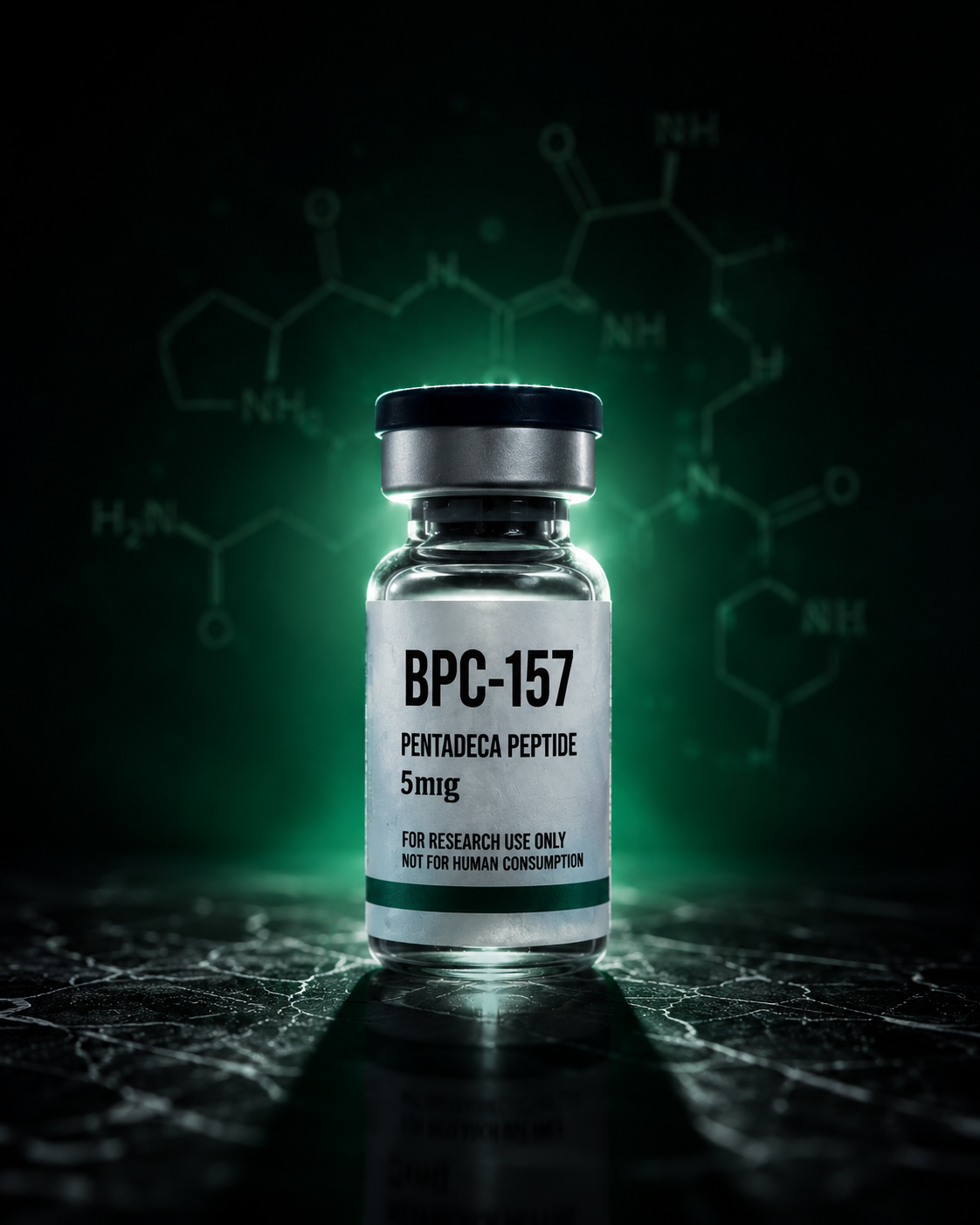
BPC-157 is supplied as a lyophilized (freeze-dried) powder in 5 mg or 10 mg vials. To use it injectably, you reconstitute the powder with bacteriostatic water (BAC water).
The reconstitution math is straightforward but worth getting right:
Concentration after reconstitution:
mg in vial ÷ mL of BAC water added = mg/mL concentration
So a 5 mg vial reconstituted with 2 mL of BAC water gives you 2.5 mg/mL (or 2500 mcg/mL).
Volume per dose:
Desired dose ÷ concentration = volume to inject
For a 250 mcg dose from that 2.5 mg/mL solution: 250 ÷ 2500 = 0.1 mL.
On a U-100 insulin syringe (the standard for subcutaneous peptide injection):
Volume in mL × 100 = units on the syringe
So 0.1 mL = 10 units.
If reconstitution math feels error-prone, that's because it is — small mistakes can mean 10x dosing errors. The PepOS dose calculator handles this automatically: enter your vial size, your reconstitution volume, and your target dose, and it returns both the mL and the U-100 unit reading. We built it specifically because reconstitution errors are the most common avoidable mistake new users make.
For a deeper walkthrough on reconstitution including how to choose your reconstitution volume in the first place, see our reconstitution guide.
Optimizing BPC-157 Stacks and Synergistic Peptide Protocols
BPC-157 is frequently combined with other peptides, particularly for musculoskeletal applications. The most common pairing is with TB-500 (Thymosin Beta-4), a combination commonly known in the community as the "Wolverine Stack."
The rationale for the pairing: BPC-157 and TB-500 are thought to work through complementary mechanisms — BPC-157 primarily via angiogenesis and direct tissue effects, TB-500 via cell migration and actin sequestration that supports tissue remodeling. Many practitioners report better outcomes from the combination than from either alone, though the rigorous comparative data does not exist.
A typical Wolverine Stack protocol:
- BPC-157: 250-500 mcg subcutaneous, once or twice daily
- TB-500: 2 mg subcutaneous, twice weekly
- Duration: 4-6 weeks for acute injuries, longer for chronic conditions
- Cycle: Often 4-6 weeks on, 4-6 weeks off
Less common but still seen:
- BPC-157 + GHK-Cu — for skin and connective tissue applications
- BPC-157 + KPV — for gastrointestinal applications, particularly inflammatory bowel concerns
- BPC-157 + Ipamorelin + CJC-1295 — for general recovery in combination with growth hormone secretagogues
As with single-compound dosing, these are observational patterns rather than validated protocols.
Safety Considerations
The general safety picture for BPC-157 is favorable, but several specific considerations deserve attention.
Reported tolerability: Clinical trial reports and clinician observations have generally noted good tolerability without serious adverse events. Most commonly reported effects are minor: injection site reactions, mild transient nausea (more often with oral), and occasional headache.
The angiogenesis concern: BPC-157 promotes new blood vessel formation. This is the proposed mechanism for many of its healing effects, but it's also a theoretical concern in the context of malignancy — tumors require angiogenesis to grow. There is no published evidence in humans showing increased cancer risk with BPC-157 use, but the mechanism makes its use inadvisable in patients with active or recent cancers. Anyone with a personal or family cancer history should discuss this specifically with their physician before using.
Pregnancy and breastfeeding: No human safety data exists. BPC-157 should not be used during pregnancy or while breastfeeding.
Drug interactions: Limited interaction data exists. Patients on anticoagulants, immunosuppressants, or chemotherapy should not use BPC-157 without specific physician evaluation.
WADA status: BPC-157 has been on the World Anti-Doping Agency banned list since 2022, classified under category S0 (non-exempt substances — substances not approved for any therapeutic use by any government regulatory authority). Athletes subject to WADA testing should not use BPC-157. Detection windows are not well-published but caution is warranted.
Quality and sourcing: The single largest preventable safety issue with BPC-157 has historically been the quality of the product. Gray-market "research use only" peptides have repeatedly been found in independent testing to contain incorrect dosages, impurities, or in some cases entirely different compounds than labeled. The return to compounding-pharmacy access in 2026 substantially improves this picture — USP 795 and 797 compliance, sterility testing, and pharmaceutical-grade raw materials are the baseline at licensed compounding pharmacies.
Who Should Consider BPC-157
Honest framing: the populations most likely to derive benefit from BPC-157, based on current evidence, are:
- Patients with documented gastrointestinal conditions — particularly inflammatory or healing-related GI issues. The mechanistic and preclinical case is strongest here.
- Athletes and active individuals with soft-tissue injuries — tendon, ligament, muscle injuries where the conventional treatment is largely rest and time. The observed clinical experience is most developed in this population.
- Post-surgical patients — for accelerated healing of certain procedures, used under surgical guidance.
Less compelling, given current evidence:
- General "wellness" or anti-aging use without a specific injury or condition. The case for benefit is weakest here and the risk/benefit becomes less favorable.
- Indefinite continuous use. Most clinical practice involves discrete courses with breaks.
Inadvisable:
- Active or recent cancer
- Pregnancy or breastfeeding
- WADA-tested athletes
- Patients without a physician evaluating their specific case
How PepOS Helps
If you and your physician decide BPC-157 is appropriate, the operational details — reconstitution math, dose tracking, vial inventory, side effect monitoring, protocol scheduling — are exactly what PepOS is built for. The dose calculator handles the reconstitution math for any vial size and reconstitution volume. Inventory tracking tells you when your vial is running low so you don't miss a dose. The Apple Health integration overlays your protocol timeline against your recovery metrics — sleep, HRV, resting heart rate — so you can see whether the protocol is actually moving the metrics that matter to you. Peppy, the AI assistant, answers protocol-specific questions with citations to the primary literature referenced here.
Start your first BPC-157 protocol free — the dose calculator and tracking are included on the free tier.
Sources Cited
-
Sikiric P, et al. Pentadecapeptide BPC 157, in clinical trials as a therapy for inflammatory bowel disease (PL-10, PLD-116, PL14736, Pliva, Croatia), in the treatment of reperfusion injury following experimental ischemia, and in cytoprotection. PubMed 18818478, 2008.
-
Sikiric P, et al. The Stable Gastric Pentadecapeptide BPC 157 Pleiotropic Beneficial Activity and Its Possible Relations with Neurotransmitter Activity. PMC11053547, 2024.
-
S808 Oral Peptide BPC-157 — An Emerging Adjunct to Gastrointestinal Therapies? American Journal of Gastroenterology, October 2025 supplement.
-
Kennedy RF Jr. Public statement on FDA peptide reclassification. Joe Rogan Experience episode #2461, February 27, 2026.
-
World Anti-Doping Agency. 2022 Prohibited List International Standard. WADA, 2022. (S0 classification of BPC-157.)
-
FDA. 503A Compounding Bulks List — Categories 1 and 2. Updated continuously at fda.gov.
-
PubChem CID 9941957: Body Protection Compound-157. National Library of Medicine.
Have a specific peptide you're trying to figure out the status of? Open Peppy in the PepOS app — protocol-specific guidance grounded in primary literature.