BAC Water vs Sterile Water: Which Do You Actually Need?
Understanding the critical differences between bacteriostatic and sterile water for peptide reconstitution.
Educational content only. Not medical advice. Always work with a licensed healthcare provider on protocol design and obtain reconstitution water from a legitimate source.
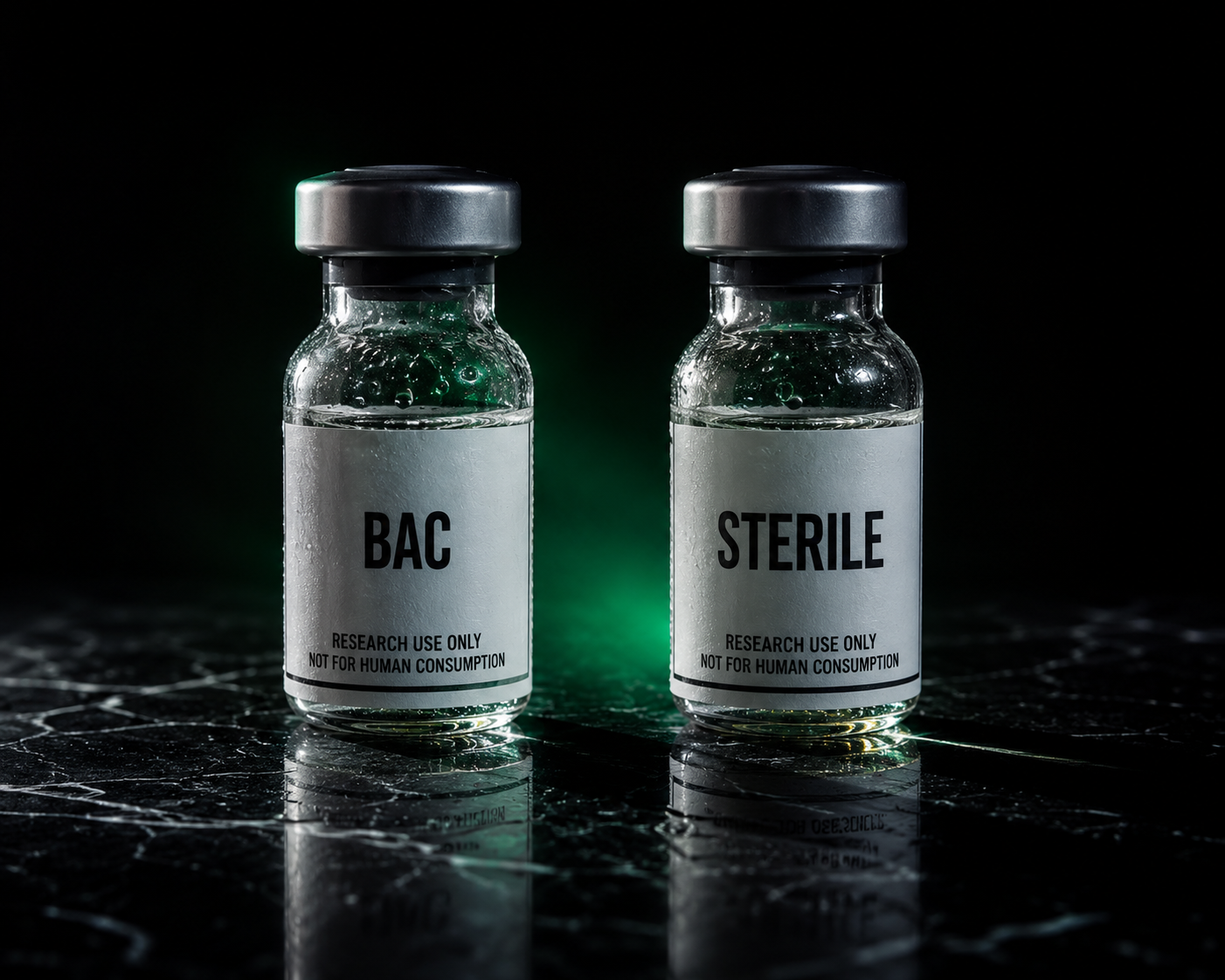
If you've just received your first peptide vial and you're looking at the reconstitution water options, the labels can be confusing. "Sterile Water for Injection." "Bacteriostatic Water for Injection." Two products that look essentially identical, sold in similar small vials, both apparently usable. Which do you actually want?
The short answer: bacteriostatic water (BAC water) for almost every peptide reconstitution. Sterile water has its uses but they're narrower than most people assume. This post explains the difference, when each is appropriate, and the safety nuances that matter.
Understanding BAC Water vs. Sterile Water
Both products start from the same place: medical-grade water that has been sterilized to remove all microorganisms. The difference is what's added afterward.
Sterile Water for Injection (SWFI) is exactly what it sounds like — purified water that has been sterilized and packaged for injectable use. Nothing else. No preservatives, no additives. Once the vial is opened, the water inside is no longer protected against bacterial growth from anything that might enter the vial (a needle, air exposure, etc.).
Bacteriostatic Water for Injection (BWFI / "BAC water") is sterile water with the addition of a small amount of benzyl alcohol as a preservative. The benzyl alcohol concentration varies slightly by manufacturer — typically 0.9% in most peptide-community products, 1.1% in some FDA-approved drug labels — but the function is the same: it inhibits bacterial growth, allowing the reconstituted product to remain safe for repeated use over an extended period.
The Practical Difference
Why does this matter? Because almost every peptide protocol involves a multi-use vial.
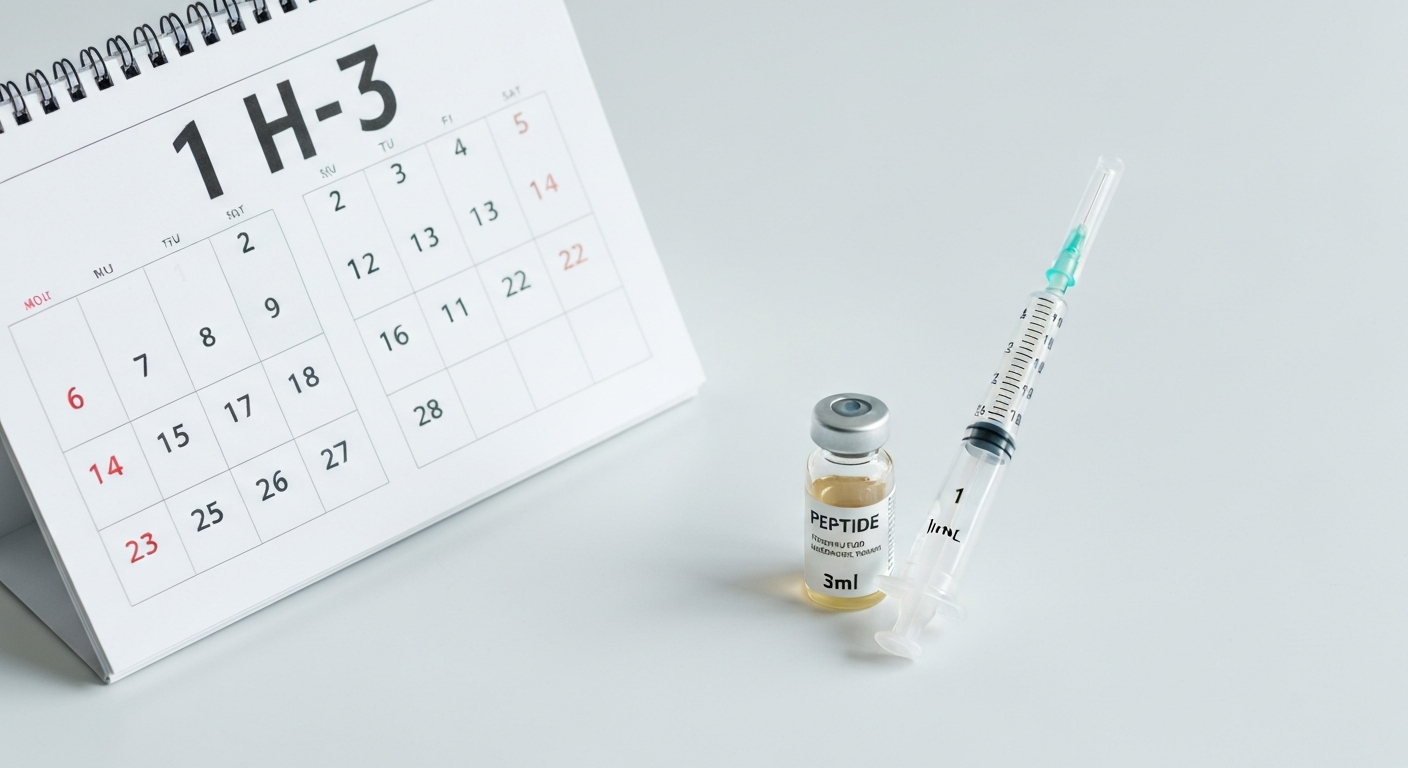
A typical 10 mg BPC-157 vial reconstituted at 2 mL gives you 40 doses if you're injecting 250 mcg per dose. You're going to be drawing from that vial daily, or twice daily, for the next several weeks. Each draw involves inserting a needle through the rubber stopper of the vial.
With BAC water, the benzyl alcohol prevents bacterial growth, and the standard window for use is 28 days from first puncture. The FDA-approved drug labels for products that use BWFI as their diluent specifically reference this 28-day stability.
With sterile water, there is no preservative. Bacteria that enter the vial during repeated needle punctures have nothing inhibiting their growth. Sterile water is appropriate only for single-use preparations — reconstitute, use the entire vial in one or a small number of doses, and discard.
For nearly every peptide protocol in the optimization space, this means BAC water is the right choice. The exceptions are narrow and we'll cover them below.
The 28-Day Window
The 28-day stability window with BAC water has a specific origin: it's based on the manufacturer-validated preservative effectiveness of benzyl alcohol at the standard concentration, plus pharmacy compounding best practices.
A few important nuances about the 28-day window:
The clock starts at first puncture, not at reconstitution. Some sources conflate these. Once you stick a needle through the rubber stopper, the timer begins.
The 28 days assumes proper storage. Refrigeration (36-46°F / 2-8°C) is the standard. Storing the reconstituted vial at room temperature significantly shortens the safe window and is not advised for any peptide intended for multi-dose use.
The 28 days is the upper bound, not a guarantee for every peptide. Most peptides used in optimization protocols are stable within this window when properly stored, but specific compounds vary. Some degrade faster than others. When in doubt, shorter is safer.
After 28 days, discard the remaining solution. Even if there's product left, even if it looks fine, even if the peptide is expensive. The risk of contamination and degraded product outweighs the cost of any vial.
When Sterile Water Is Actually Appropriate
There are a few situations where sterile water is the right choice:
1. Single-use reconstitutions. If you're reconstituting a vial that will be entirely used in one dose or a small number of doses over a short window, sterile water works. This is uncommon in optimization peptides but standard in some pharmaceutical preparations.
2. Benzyl alcohol hypersensitivity. Rare but real. Patients with documented benzyl alcohol allergy should use sterile water and treat each reconstituted vial as single-use. FDA-approved drug labels for products like Herceptin specifically include alternative single-use sterile water preparation instructions for patients with this hypersensitivity.
3. Neonatal use. Benzyl alcohol toxicity in newborns — "gasping syndrome" — is a documented and significant risk. Bacteriostatic water is contraindicated for any injectable preparation given to neonates. This doesn't apply to adult peptide use but is the underlying reason for the FDA's specific guidance on benzyl alcohol in injectable preparations.
4. Some specific peptide manufacturer recommendations. A small number of specific peptides have stability profiles that interact with benzyl alcohol unfavorably. Where this is the case, the manufacturer or compounding pharmacy will specify sterile water. Check your product's documentation.
For the standard case — adult patient, multi-dose peptide vial used over several weeks — BAC water is the appropriate choice in essentially every scenario.
Safety Considerations with Benzyl Alcohol
The benzyl alcohol in BAC water is generally considered safe at the small amounts used in peptide reconstitution. Adults metabolize benzyl alcohol to benzoic acid and excrete it readily. The total dose of benzyl alcohol from a typical peptide injection is tiny — less than 5 mg per dose in most protocols, well below thresholds where benzyl alcohol toxicity becomes a concern.
That said, a few specific populations should exercise additional caution:
- Pregnancy and lactation: Benzyl alcohol crosses the placenta and is found in breast milk. While the amounts involved in peptide reconstitution are small, peptide therapy generally is not recommended in pregnancy or while breastfeeding in any case.
- Neonates and infants: Benzyl alcohol toxicity ("gasping syndrome") is a serious risk in newborns. BAC water is contraindicated for injectable preparations in this population.
- Significant liver impairment: Patients with severely compromised liver function may have reduced capacity to metabolize benzyl alcohol. Discuss specifically with a prescribing physician.
- Documented hypersensitivity: Rare but real. Patients with confirmed allergy to benzyl alcohol or related preservatives should not use BAC water.
For the general adult population using peptides under physician supervision, the benzyl alcohol concentration in BAC water is not a meaningful safety concern.
How to Source BAC Water
A few notes on obtaining BAC water:
Pharmacy-grade BAC water requires a prescription in the United States. It's often available through telehealth services that prescribe peptide therapy, and the same compounding pharmacies that prepare peptide compounds typically supply BAC water alongside.
Research-grade BAC water is sold by peptide vendors. Quality varies significantly. The same quality-control concerns that apply to gray-market peptides apply to gray-market BAC water — sterility, accurate benzyl alcohol concentration, and absence of contaminants are not verifiable from a label alone.
The standard package size is small. Most BAC water vials are 30 mL, which is enough for a substantial number of peptide reconstitutions. Larger sizes are available but uncommon.
Storage: Unopened BAC water is shelf-stable at room temperature until its labeled expiration. Once opened, it should be refrigerated and used within the manufacturer's specified window (typically 28 days, mirroring the same window applicable to reconstituted peptides).
How PepOS Helps
PepOS tracks each reconstituted vial — date of reconstitution, concentration, doses remaining, expiration based on the 28-day window — so you don't have to rely on a label that might rub off or memory you might second-guess. The dose calculator works regardless of which diluent you've used.
Sources Cited
-
FDA. Bacteriostatic Water for Injection (BWFI), USP — labeling and storage guidance. fda.gov.
-
FDA. Sterile Water for Injection (SWFI), USP — labeling guidance. fda.gov.
-
United States Pharmacopeia. USP Monograph for Bacteriostatic Water for Injection. USP-NF, current edition.
-
Genentech. Herceptin (trastuzumab) prescribing information — multi-dose vial preparation with BWFI containing 1.1% benzyl alcohol; alternative SWFI preparation for benzyl alcohol hypersensitivity. Drugs@FDA.
-
American Academy of Pediatrics. Benzyl alcohol and "gasping syndrome" in neonates. Pediatrics, multiple references.
Questions about your reconstitution? Open Peppy in the PepOS app.