Peptide Glossary — Key Terms Explained

A comprehensive glossary of the most common terms you will encounter in the PepOS app and peptide community.
A
Amino Acid The building blocks of peptides and proteins. There are 20 standard amino acids. Peptides are chains of 2-50 amino acids linked by peptide bonds.
Angiogenesis The formation of new blood vessels from existing ones. BPC-157 promotes angiogenesis, which is why it accelerates healing — new blood vessels bring nutrients and oxygen to injured tissue.
B
BAC Water (Bacteriostatic Water) Sterile water containing 0.9% benzyl alcohol as a preservative. Used to reconstitute lyophilized peptides. The benzyl alcohol prevents bacterial growth, allowing the reconstituted vial to last 28-30 days refrigerated.
Bioavailability The percentage of an administered compound that reaches systemic circulation. Subcutaneous injection has high bioavailability (near 100%). Oral peptides have much lower bioavailability because stomach acid degrades them.
Biomarker A measurable indicator of biological state. Blood markers like IGF-1, fasting glucose, and hs-CRP are biomarkers used to assess peptide protocol effectiveness.
BPC (Body Protection Compound) A pentadecapeptide (15 amino acids) derived from human gastric juice. BPC-157 is the most studied sequence, known for tissue repair and gut healing properties.
C
Certificate of Analysis (COA) A document from an independent lab verifying a peptide's identity, purity, and safety. Look for HPLC purity above 98%, endotoxin testing, and mass spectrometry confirmation.
Cycle A defined period of using a peptide protocol, typically measured in weeks. Example: "an 8-week BPC-157 cycle." Cycling includes both the on-period and the off-period between cycles.
D
Desensitization Reduced response to a compound after prolonged use. Receptors downregulate when continuously stimulated. This is why cycling (taking breaks) is important — it allows receptors to resensitize.
E
Endotoxin Bacterial toxins that can contaminate poorly manufactured peptides. Endotoxin testing on a COA confirms the product is free of these contaminants. Injection of endotoxin-contaminated products causes fever, inflammation, and illness.
G
GH (Growth Hormone) A 191-amino acid protein produced by the pituitary gland. GH promotes growth, cell repair, and metabolism. GH secretagogues (CJC-1295, Ipamorelin, MK-677) stimulate the body's natural GH production.
GHK-Cu A tripeptide (three amino acids) naturally present in human plasma. When complexed with copper, it promotes wound healing, collagen synthesis, and anti-inflammatory effects.
GHRP (Growth Hormone Releasing Peptide) A class of peptides that stimulate GH release by acting on the ghrelin receptor. Includes GHRP-2, GHRP-6, Hexarelin, and Ipamorelin.
GLP-1 (Glucagon-Like Peptide-1) A hormone that regulates blood sugar and appetite. GLP-1 receptor agonists (Semaglutide, Tirzepatide, Retatrutide) mimic this hormone for weight management.
H
Half-Life The time it takes for half of a compound to be eliminated from the body. A longer half-life means less frequent dosing. CJC-1295 with DAC has a half-life of 6-8 days; without DAC, about 30 minutes.
HPLC (High-Performance Liquid Chromatography) A laboratory technique used to measure peptide purity. HPLC purity above 98% is considered acceptable for research peptides. Above 99% is excellent.
I
IGF-1 (Insulin-Like Growth Factor 1) A hormone produced primarily by the liver in response to growth hormone. IGF-1 blood levels are the primary biomarker for assessing whether GH peptides are working.
Intramuscular (IM) Injection into muscle tissue, typically using a longer needle (25-27 gauge, 1-1.5 inches). Less common for peptides than subcutaneous injection.
L
Lipodystrophy Changes in fat tissue caused by repeated injections in the same location. Can manifest as lumps (lipohypertrophy) or depressions (lipoatrophy). Prevented by proper site rotation.
Lyophilized Freeze-dried. Peptides are sold in lyophilized (powder) form for stability. They must be reconstituted with BAC water before use.
M
Mass Spectrometry A laboratory technique that confirms the molecular identity of a peptide by measuring its mass-to-charge ratio. An important verification on a COA alongside HPLC.
Mechanism of Action How a compound produces its biological effects. BPC-157's mechanism of action includes promoting angiogenesis, modulating nitric oxide, and upregulating growth factor receptors.
N
Neuroprotective Protecting nerve cells from damage or degeneration. Semax and Selank are neuroprotective peptides that support brain health through BDNF modulation.
P
Peptide A short chain of amino acids (typically 2-50) linked by peptide bonds. Smaller than proteins but larger than individual amino acids. They act as signaling molecules in the body.
Pharmacokinetics How the body absorbs, distributes, metabolizes, and eliminates a compound over time. Determines dosing frequency and route of administration.
Protocol A structured plan for using peptide compounds, including which compounds, doses, frequencies, routes, and cycle lengths. In PepOS, a protocol is your tracked plan.
R
Receptor A protein on cell surfaces that binds to specific molecules (like peptides) to trigger a biological response. GLP-1 receptors, ghrelin receptors, and melanocortin receptors are examples relevant to peptide use.
Reconstitution The process of dissolving lyophilized (freeze-dried) peptide powder in bacteriostatic water to create an injectable solution.
S
Secretagogue A substance that stimulates the secretion of another substance. GH secretagogues stimulate growth hormone secretion from the pituitary gland.
Stack Two or more peptide compounds used together in a protocol for synergistic effects. Example: the "Wolverine Stack" (BPC-157 + TB-500).
Subcutaneous (SubQ/SC) Injection into the fat layer just beneath the skin. The standard administration route for most peptides. Uses thin, short needles (29-31 gauge insulin syringes).
T
Tachyphylaxis Rapid decrease in response to a drug after repeated doses. Similar to desensitization. Common reason for cycling peptides.
Titration Gradually increasing the dose of a compound over time. Standard practice for GLP-1 agonists to minimize side effects.
V
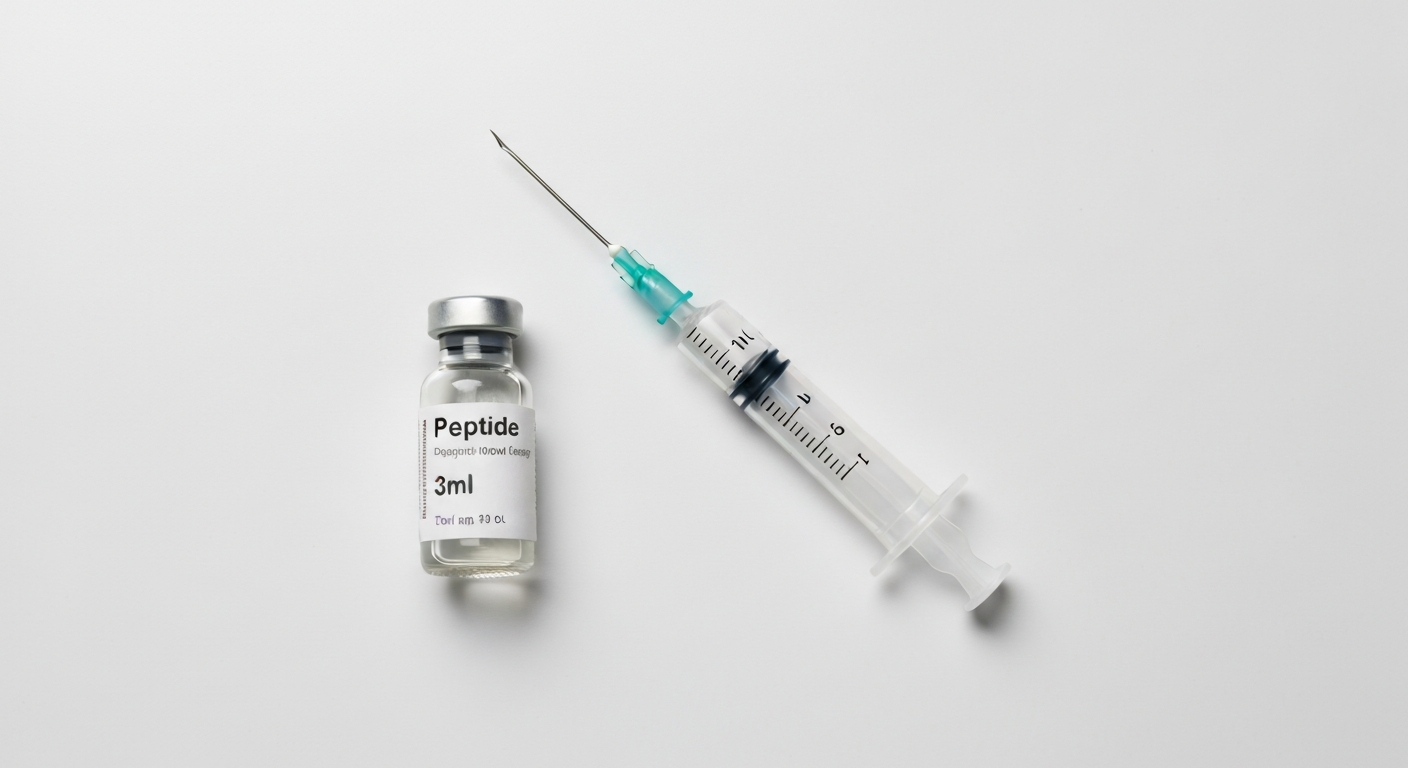
Vial The glass container holding lyophilized peptide powder. Sealed with a rubber stopper and aluminum crimp cap. Typical sizes: 2mg, 5mg, 10mg.
This glossary covers the most common terms you will encounter in the PepOS app and peptide community. For compound-specific information, browse the 260+ profiles in the PepOS Library.
Ready to start tracking?
Download PepOS on the iOS App Store to track your protocols, monitor your vial inventory, and sync your actual recovery data with Apple Health.
Educational content only. Not medical advice. Consult a healthcare professional before starting any protocol.